
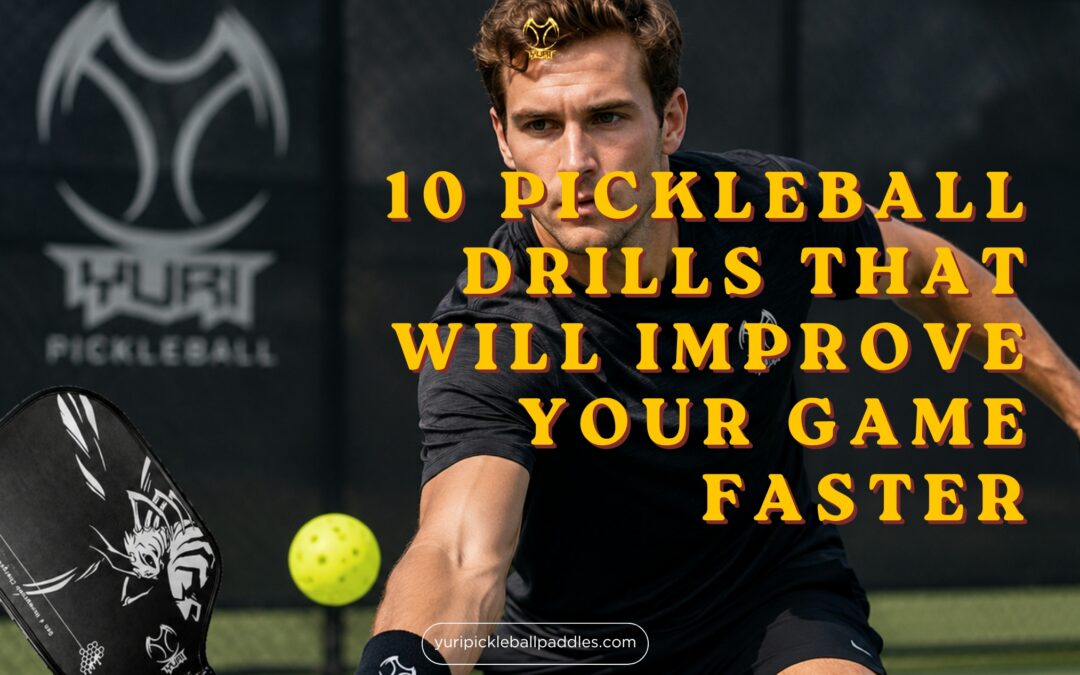
Pickleball's rapid growth continues to attract players of all ages and skill levels. While playing recreational games is a great way to enjoy the sport, focused pickleball practice is what truly accelerates improvement. Whether you're a beginner learning the fundamentals or an intermediate player striving for greater consistency, incorporating targeted drills into your routine can help you develop stronger mechanics, better decision-making, and more confidence on the court.
This guide covers 10 highly effective pickleball drills designed to improve key areas of your game, including dinking, third-shot drops, volley control, footwork, serve accuracy, and backhand consistency.
Why Drills Matter
Many players plateau because they spend most of their time playing games rather than practicing specific skills. Structured pickleball training allows you to isolate weaknesses and repeat movements until they become second nature.
Benefits of regular drilling include:
- Improved shot consistency
- Faster reaction times
- Better court positioning
- Increased confidence under pressure
- Enhanced muscle memory
If your goal is to improve your pickleball game faster, these drills should become part of your weekly training routine.
1. Cross-Court Dinking Drill
Dinking is one of the most important skills in pickleball. This drill develops touch, patience, and placement.
How to do it:
- Stand at opposite kitchen lines with a partner.
- Exchange cross-court dinks only.
- Aim for 25 consecutive shots without an error.
Focus on:
- Soft contact
- Consistent arc
- Placement rather than power
This is one of the most valuable beginner pickleball drills because it teaches control and shot discipline.
2. Straight-On Dinking Challenge
Once you're comfortable with cross-court dinks, move to straight-ahead dinking.
How to do it:
- Stand directly across from your partner at the kitchen line.
- Maintain a rally of at least 50 dinks.
Focus on:
- Paddle angle control
- Maintaining balance
- Keeping the ball low
This drill helps prepare players for kitchen exchanges during competitive matches.
3. Third-Shot Drop Drill
The third-shot drop is often considered the most important shot in pickleball.
How to do it:
- Begin at the baseline.
- Have your partner feed balls from the kitchen line.
- Practice hitting soft shots that land in the opponent's kitchen.
Focus on:
- Smooth swing mechanics
- Arc and trajectory
- Consistent placement
Mastering this drill helps you transition from defense to offense more effectively.
4. Serve Accuracy Targets
A powerful serve is helpful, but an accurate serve is often more valuable.
How to do it:
- Place cones or markers in different areas of the service court.
- Attempt to hit each target repeatedly.
- Keep a score of successful placements.
Focus on:
- Consistency
- Depth
- Directional control
Improved serving accuracy can immediately elevate your overall performance.
5. Return of Serve Consistency Drill
Many points are lost due to poor returns.
How to do it:
- Have a partner serve repeatedly.
- Focus on returning deep into the court.
- Alternate between forehand and backhand returns.
Focus on:
- Controlled swings
- Deep placement
- Quick recovery positioning
This drill improves both consistency and strategic court positioning.
6. Volley Control Drill
Fast hands are essential at the kitchen line.
How to do it:
- Stand at the non-volley zone with a partner.
- Exchange volleys without allowing the ball to bounce.
- Gradually increase pace.
Focus on:
- Compact paddle movements
- Quick reactions
- Balanced stance
This drill develops confidence during fast-paced exchanges.
7. Backhand Consistency Drill
Many players naturally favor their forehand and neglect their backhand.
How to do it:
- Have a partner feed balls exclusively to your backhand side.
- Hit controlled shots back to a designated target area.
- Repeat for multiple sets.
Focus on:
- Proper foot positioning
- Stable paddle face
- Smooth follow-through
A dependable backhand can dramatically improve your ability to handle pressure situations.
8. Figure-Eight Footwork Drill
Efficient footwork allows players to reach more balls while maintaining balance.
How to do it:
- Set up two cones approximately six feet apart.
- Move around them in a figure-eight pattern.
- Maintain an athletic stance throughout the drill.
Focus on:
- Quick directional changes
- Balance
- Staying on the balls of your feet
This is one of the best pickleball training exercises for improving court mobility.
9. Kitchen Line Transition Drill
Advancing from the baseline to the kitchen line is a critical skill.
How to do it:
- Start at the baseline.
- Hit a third-shot drop.
- Move forward one step after each successful shot.
- Continue until you reach the kitchen line.
Focus on:
- Controlled movement
- Shot quality
- Maintaining balance
This drill teaches players how to transition effectively without rushing.
10. Two-Ball Reaction Drill
Quick reactions often separate good players from great players.
How to do it:
- Have a partner alternate feeding balls rapidly to different locations.
- React and return each ball while maintaining ready position.
Focus on:
- Hand speed
- Anticipation
- Recovery after each shot
This drill simulates real-game pressure and improves reaction time.
Creating an Effective Practice Routine
To maximize improvement, dedicate practice sessions to specific skills rather than trying to work on everything at once.
A simple weekly plan could include:
- Day 1: Dinking and volley control
- Day 2: Serve accuracy and returns
- Day 3: Third-shot drops and transitions
- Day 4: Footwork and reaction drills
Consistent, purposeful practice is far more effective than occasional marathon sessions.
Improve Your Pickleball Game
Improvement in pickleball doesn't happen by accident. It comes from deliberate repetition, proper technique, and focused training. By incorporating these 10 pickleball drills into your routine, you'll develop stronger fundamentals, improve consistency, and gain the confidence needed to perform under pressure.
Whether you're working on beginner pickleball drills or refining advanced skills, these exercises provide a structured path toward better performance. Commit to regular pickleball practice, stay patient with the learning process, and you'll see measurable progress on the court faster than you might expect.